
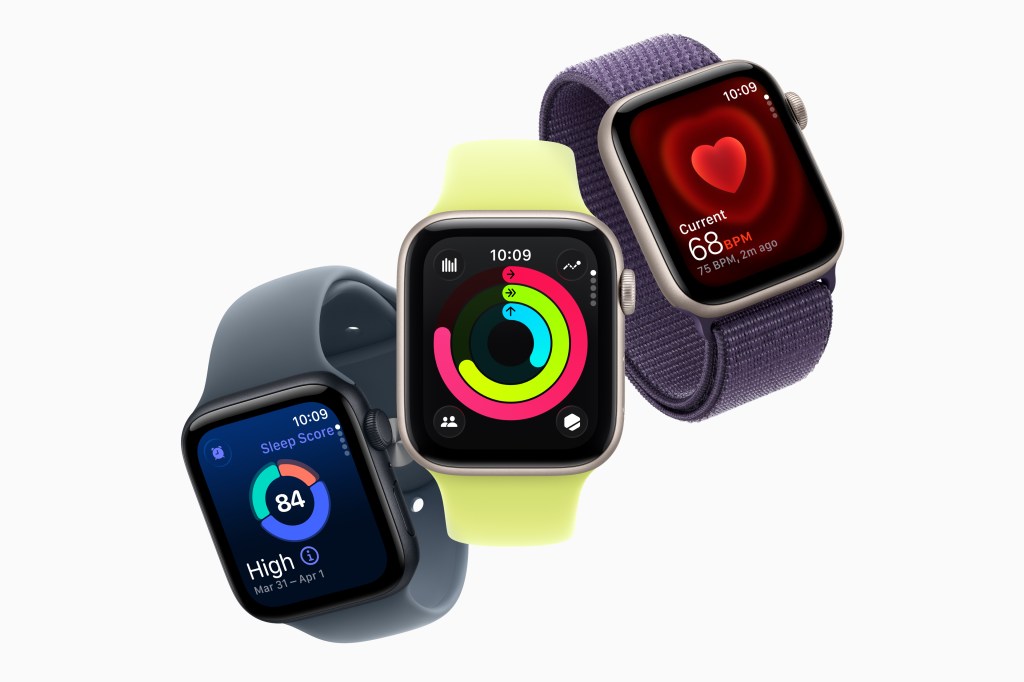
Continuing with my thoughts on the September Apple event, I’ve turned my attention to the Apple Watch, as it also received some substantial updates this year, though not in the way we’d expect.
The Apple Watch Series 11, Ultra 3, and SE 3 were all unveiled, but only the latter got major upgrades. In fact, this might be the most iterative update to the standard Apple Watch (Series 11) ever. For the first time since the product’s inception, Apple didn’t update the processor in its Watch line. No S11 chip powers the flagship models. Instead, Apple updated the Watch SE 3 to the S10 chip, effectively putting their budget watch on equal footing with its more expensive cousins.
The Apple Watch SE 3 is, in my opinion, the best option, and that’s what I want to focus on here. But, for context, here are a few of the upgrades across the line. The Ultra 3 (the most overkill device in the line) got a slightly larger display with better viewing angles (and thinner bezels), an improved and more effective always-on display, 42 hours of battery life, 5G support, and a variety of improved satellite messaging and GPS features. The Apple Watch Series 11 aluminum models have improved Ion-X glass for scratch and break resistance (with “atomic level” ceramic coating), 5G support, hypertension notifications, and a new sleep score feature. Pretty minor.
It’s worth noting that the new Series 11 health features are impressive. Data from Apple’s Heart and Movement Study, which launched in 2019, has health data from over 100,000 participants. By combining that data with machine learning, Apple developed an algorithm to detect signs of hypertension. It’s amazing to me that the optical heart rate sensor is sensitive enough to measure changes in microvascular blood volume, so that users can be alerted if the Watch suspects they have hypertension. That disease kills roughly 10.9 million people globally each year.

What did the SE 3 receive this year? Well, amazingly, it’s more or less equivalent to the Series 11 with a few caveats. It continues to have smaller 40mm and 44mm display options with larger bezels. I think this is a reasonable tradeoff. It’s missing a couple of health features, such as blood oxygen monitoring, ECG, and the new hypertension feature. Its battery life is still capped at 18 hours, though Andrew Gebhart at PC Magazine argued it could definitely get two days before requiring a charge (probably due to a more efficient chip). The inclusion of fast charging (45 minutes to get 80% battery) somewhat negates the smaller battery. If you wear this at night, dropping the Watch on the charger while you shower should top up the battery enough. Wrist flicks and pinch finger gestures for OS navigation have also made their way to the SE, as well as the AI Workout Buddy features (if you have an Apple Intelligence compatible phone), and on-device Siri controls. The biggest upgrade is clearly the always-on display and the same Ion-X crack and scratch-resistant glass as the higher-end models. The SE also gets a wrist temperature sensor, sleep apnea notifications, and cycle tracking. Wow.
All the new watches, as well as several older models, received the new sleep score feature. Different wearable manufacturers create sleep scores using different data points, and from what I’ve read Apple’s approach is more simplistic. But, as someone who uses the Watch for sleep tracking I’m excited.
I recommend the SE 3 review by Mobile Syrup’s Brad Bennett. He notes that it’s a great option for most people, unless you’re an athlete or are very health-conscious. He asks a great question. Why did the SE receive such an awesome upgrade?
Part of me wonders if the SE was upgraded so substantially this year because next year, Apple Intelligence is going to come to the Series 12, giving it a much more powerful chip than the S10. Thus, making the gap between the Series and the SE much more substantial once again. But, that’s just a theory, and due to the battery limitations on all the watches, Apple might not ever put Apple Intelligence on them.
~ Brad Bennett, Mobile Syrup
Given that Apple made almost no mention of Apple Intelligence at the September event, and that they’re having enough trouble rolling these AI features out to phones, I’m skeptical about AI on the Watch. What do you think? Does AI on a watch make for the ultimate Dick Tracey-like wearable?
On a side note, the design of the SE is often listed as a downside. The Verge gave the SE 3 a 9/10, and they agree with me that the SE is “the [Apple Watch] to buy.” However, under cons, they say “Those bezels are still thicc.” The SE indeed retains much of the Series 4 design, which is boxier. But, personally, I prefer that slightly boxier chassis. For whatever reason, I find the rounded, pill-shaped look of the Series 10 and 11 to have a 70s aesthetic. The smaller, more geometric SE, to me, looks like it has more heft and comes across as understated and professional.
In summation, there are not that many features reserved for the Series 11. Granted, the SE models aren’t typically updated every year, so eventually the value proposition will be less appealing when the Series 12 is released next year. The magnitude of SE 3’s upgrades is similar to those of the base iPhone 17. These baseline watches (and phones) are very solid and have closed the feature gap. It also showcases that the differentiation between product categories is either health monitoring or niche pro markets.
Though critics might not have felt that Apple’s event was “jaw-dropping” as proclaimed, the Apple Watch SE 3 was one of those rare announcements that had me excited. It means more people can get access to great technology at an affordable price.
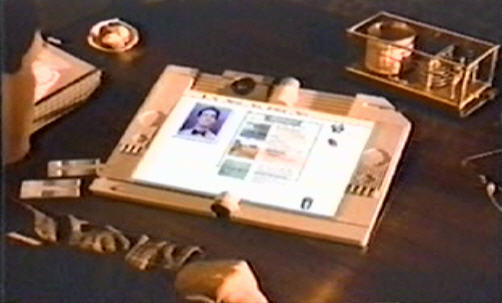
There’s a running joke in my family that I’m in love with the iPad. It’s true because it was the computer I always wanted as a kid. It’s the closest I could get to the Apple Knowledge Navigator, a simple, handheld PC that I could talk to and easily carry with me. While I love my tablet, the Apple Watch was a “nice to have” purchase that turned out to be transformative for my daily habits.
Thanks to the Watch, my phone sits in the kitchen when I’m at home – a tip from Cal Newport’s Deep Questions Podcast. The Watch provides me just enough information to stay connected, but not so much that I open the application (like email) only to look up and notice an hour has gone by. I can see texts from family members, and responding with my voice has become second nature; it works surprisingly well.
Because my phone usage dropped by about 75%, I no longer feel the need to use social media or many of the accounts I accumulated over the past ten to fifteen years, so I deleted the majority of them. My reduced screen time also means I purchase less, and I’m not as tempted to pull out my phone for something to do when a boring situation arises.
Exercise data from my Watch is interesting, but it’s the little nudges encouraging me to complete my (very reasonable) fitness goals that are most useful. I’m in better shape now, doing consistent movement, than I ever was doing less frequent HITT workouts. Sleep data helped me create more consistent bedtimes, and the Watch reminds me of this.
It sounds silly to admit that I use a piece of technology to ameliorate the problems introduced by another piece of technology, but it’s true. The Apple Watch is a quaint, unobtrusive device that provides useful just-in-time information and reminders. That’s it. The Apple Watch SE 3 is such a great value at its price point that, I think, it was the star of the show.
 Erik Christiansen
Leave a comment