
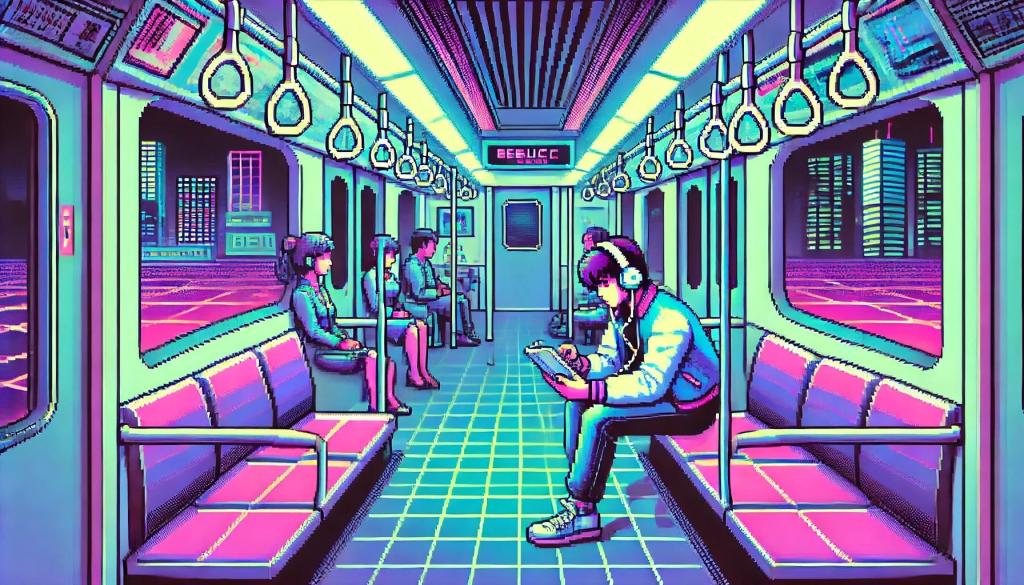
Since the invention of the smartphone, there has been an unprecedented level of convergence of our personal technology. The portable music player, the book, notebook, digital recorder, phone, and GPS tracker where all devices that we might have carried with us at one time. Now, these devices have been collapsed into one device – our phones and tablets. The explosion of apps, thanks to the App Store and Google Play, have allowed the functionality of our phones to grow exponentially. There’s no doubt this convergence is convenient – not to mention more pocketable. But, there’s also a downside. Having all these features in one device is distracting. We’re increasingly unfocused and inattentive, context switching between different tasks.
When you open your phone, the choices can be overwhelming. You want to be entertained? You might be choosing from five different streaming apps, each with thousands of hours of content. Want to read a book? Try choosing a from an array of digital book sellers (or your local library), giving your access to almost every book ever written. Want to watch a video? Open YouTube and let the autoplay drain your afternoon. The overwhelming number of options contributes to our constant context switching because our brains didn’t evolve to handle this many choices. We are paralyzed by choice.
Additionally, notifications are the ultimate distraction. Phone calls, text messages, app updates, and other notifications are all competing for your attention. Being pinged constantly is not conducive for a quiet reading session. Apple and Google have attempted to address this through their respective “focus modes” whereby you can block all incoming distractions. This is effective for dealing with notifications, but it doesn’t reduce the temptation to open another app and start scrolling.
I equate opening my phone to walking into a Blockbuster in the early 2000s. You’re confronted with walls of content. If you didn’t go there with a specific movie in mind, you can find yourself wandering the store for an hour.
The paralysis of choice
The idea of the paralysis of choice is well documented pop culture and psychological research. “Overchoice” was coined by Alvin Toffler in his book Future Shock which describes a future where people are overwhelmed by rapid change over a short time. He defines this phenomenon as when “…the advantages of diversity and individualizations are canceled by the complexity of [the] buyer’s decision making process.”

In their paper, When Choice is Demotivating: Can One Desire Too Much of a Good Thing?, authors Sheena Iyengar (Columbia University) and Mark Lepper (Stanford University) discuss the results from three consumer choice studies. In the first study, consumers shopping at a high-end grocery store are given either six or twenty-four choices of jams. In the second study, students are given the option to write an essay for extra credit – choosing from either six or thirty different topics. In the third study, subjects were asked to choose between either six or thirty different chocolates. The results clearly demonstrate that excess choice inhibits our decision making ability.
“Studies 1, 2, and 3 provide compelling empirical evidence that the provision of extensive choices, though initially appealing to choice-makers, may nonetheless undermine choosers’ subsequent satisfaction and motivation…Perhaps it is not that people are made unhappy by the decisions they make in the face of abundant options but that they are instead unsure—that they are burdened by the responsibility of distinguishing good from bad decisions.”
Iyengar & Lepper, 2000, DOI: 10.1037//0022-3514.79.6.995
In his book The Paradox of Choice, Barry Schwartz presents similar evidence demonstrating that when presented with too many choices we experience choice overload. This is counterintuitive that too many choices can have a negative effect. Schwartz argues that our likelihood of experiencing regret increases with the number of choices available.
As a result of our increasing choice overload, we have a love hate relationship with our phones and tablets. The reaction, is the resurgence of niche single purpose devices. As people realize their ability to focus withering, they gravitate towards solutions that will help them reclaim their focus, and there are numerous examples.
“Dumbphones,” which were once marketed exclusively to older generations, have made a surprising comeback. Companies like Lite Phone promise the essential smartphone features you expect (maps, texting, and calls) while eliminating the superfluous.
Teenage Engineering has produced the ultimate high-end digital audio recorder – the TP-7. Though it’s a digital device through and through, the mechanical buttons and rewind implementation are reminiscent of analog tape recorders.
The eReader tablet reMarkable launched as a somewhat ‘pokey’ device, but subsequent iterations confirm its continued popularity among dedicated users who prefer its simplicity.
It could even be argued that Ryder Carrol’s Bullet Journal Method is a response to digital device overload. Go to any bookstore and look at the paper section. High-end notebook brands like Moleskine (which I advise people to avoid increasingly poor materials), Leuchtturm 1917, Rhodia, and Apica are commonplace. Ten years ago, these brands would only be found in specialty stationary stores.
What do we do about it?
Given my long-running interest in productivity and focus (or the “flow state”), I’ve slowly been reevaluating my relationship with modern multi-purpose devices. I cannot overstate my love for the iPad. Apple’s tablet changed how I work, and the ability to run all my apps and have access to all my data in a device that’s simpler to use has been a game changer. But, it can still be a distraction. In an effort to be more present and focus on one thing at a time, I’ve landed on the following strategies.
eReading
About a year ago I decided to try eReading again and it’s been very helpful.
Using an iPad for books is a great experience… for a little while. The bright glossy screen began to bother my eyes, and the temptation to open another app and check my email was too great. The same is true for eReading on a phone. I spend a lot of time on public transit, so I figured there was plenty of “found time” for reading if I put these multi-purpose devices away. Physical books are a fine solution for commutes, but often they’re hard to hold if both hands aren’t available. (I’m often standing on the bus or train). It’s hard to read paper when it’s dark out.
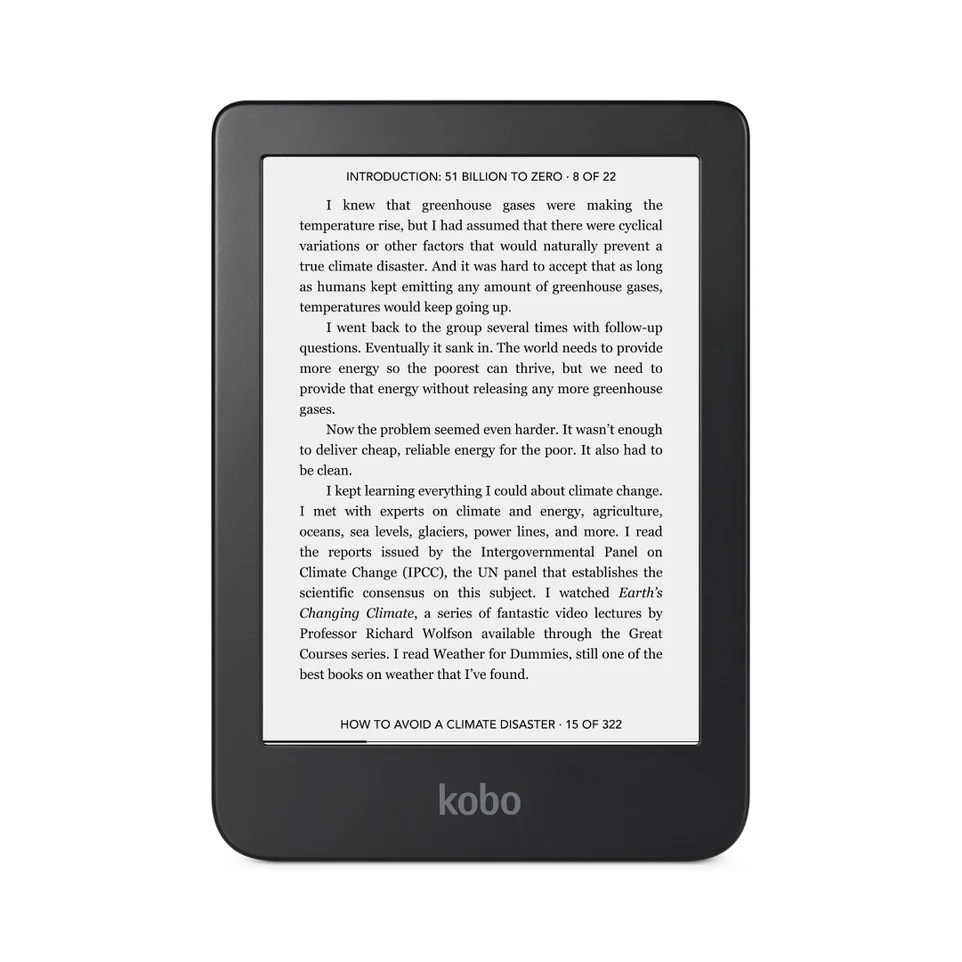
The Kobo Clara 2E is my eReader of choice because it’s inexpensive and connects easily to my local library. When commuting to work, I generally keep my phone in my bag. The Kobo is a well designed device, but it’s comparatively sluggish performance acts a deterrent to browsing the Kobo store or looking at my book stats. 99% of the time, I’m engrossed in reading while using it.
Something I’ve learned is that creating friction helps me stick to things. For instance, change a vinyl record, switching out a game disc, or pulling a new book off the shelf have more friction that scrolling through a menu of digital content. eReaders provide the convenience of being single-purpose digital devices and do one thing well, while providing just enough friction to reduce the temptation to browse rather than actually read.
MP3 players and phone free walks
Taking phone-free walks is something I try and do on a regular basis. Now, sometimes this isn’t possible since I like to have my phone on me in case a family member needs to get a hold of me. So, sometimes “phone-free” means “out of reach” – usually in a backpack.
I take a phone-free approach primarily for listening to music. In 2006, when I started university, my Mom kindly bought me an iPod Video (5th generation). I used that MP3 player for years, listening to my favourite music while walking through town or on transit. Years later, when my phone became my primary music player I noticed a trend. For whatever reason, I was more likely to switch between songs before finishing them. I’d spend hours creating playlists but not listening to them. I’d listen to music while browsing the web which meant it wasn’t really paying attention.
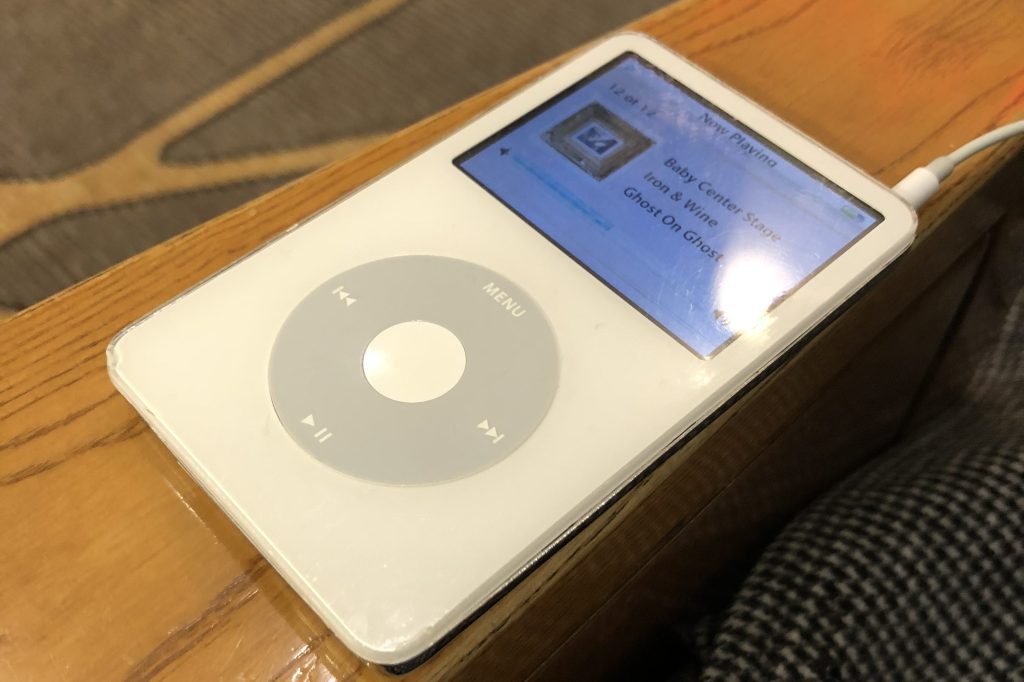
That iPod sad on a box for years, until I decided to refurbish it with new parts I bought online. Now serves as my phone-free companion. I’m much more engrossed on the music, and without any apps to distract me I spent more time walking than straining my neck looking down at a screen. My Audible books and podcasts also sync to the iPod, and I typically choose to sync only a few at a time.
The Apple Watch – a modern single purpose device (sort of)
Of all the single-purpose devices that have given me a reason to put down my phone or iPad, the Apple Watch has been the primary factor. It’s not technically single purpose (it does several things), but its form factor is not conducive distraction.
I purchased an Apple Watch SE (2nd edition) in early 2024 because a Costco deal was just to compelling to pass up. My primary health goal in 2024 has been to try and improve my sleep, so I wanted a device to track it. The deep discount from Costco brought the price down to mid-tier Fitbit territory, so I picked one up.
The sleep tracking is excellent, but the main reason I’m so happy with the Watch is that it gives me a reason to never use my phone. Notifications are a necessary evil. I like to know what emails I’m getting, phone calls, and texts. For most apps, I don’t allow them to send notifications. But checking notifications on a phone is problematic because it’s too easy to get sucked into an app. The Apple Watch is the perfect balance between information awareness and friction. Its screen is clear and crisp making it easy for me to stay in the loop, while being too small to do any meaningful interaction with the content. iPhone screen use has plummeted approximately 50% since I got the Watch. If I just want something to tell me the time, I just turn on do not disturb mode.
Offline computer just for writing
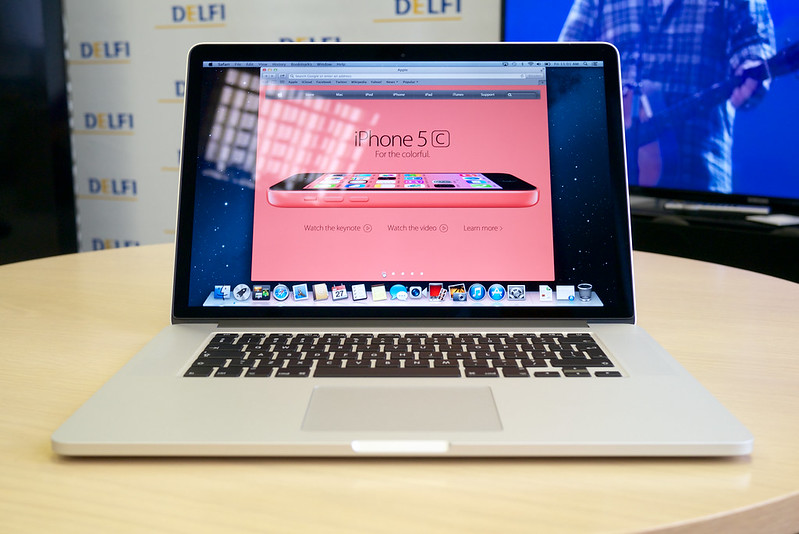
I have a 2013 MacBook Pro that mostly serves as an offline writing device. This blog post, my journal posts, and research papers are generally written on that computer. I only connect to the Internet to backup data. First, by doing this the battery life is much better. Second, I get a lot more writing done. In fact, I now get something written every day.
If you have a phone or tablet, try turning off the WiFi and data and see how much you use. Many of the apps and functions are designed with a constant connection in mind. I bet your usage would drop significantly.
A movement is building
Last Winter I came across a website called No Surf. It was advertised on a sticker on a mall food court table I was sitting at. The No Surf Movement is essentially a lifestyle philosophy that encourages individuals to reduce – or eliminate – non-purposeful Internet browsing with the goal of reclaiming that time for something else. Think of all the time wasted browsing online stores or reading Tweets, and image if you’d redirected it toward developing a skill or simply relaxing.
While I’m not one to join a movement, this philosophy has its merits. Digital technologies are incredible, but by stuffing functionality into a couple devices we are more likely to become distracted by the notifications and addictive apps. Apps can be time vampires. Time is precious and taking control of it is within everyone’s reach. By introducing a little bit more friction into our lives, and by opting to use devices intentionally to help us focus, I think we can easily reclaim that time.
 Erik Christiansen
Leave a reply to Why Retro Tech and Vintage Gadgets Are Making a Comeback in Modern Homes | Retromash Cancel reply